
November’s Most Anticipated Fiction
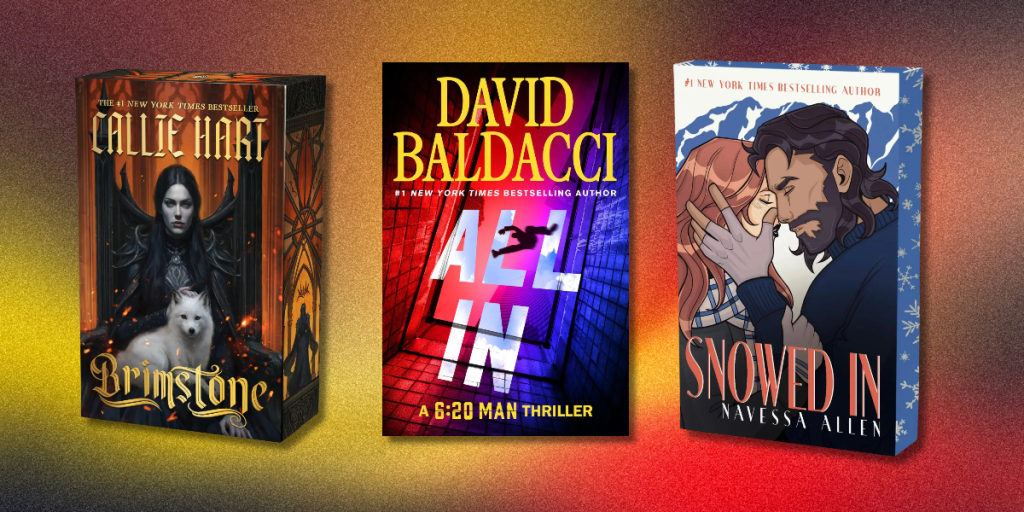
Discover all the exciting fiction books hitting shelves in November. We’ve got everything from new thrillers and steamy romance to deluxe editions and epic adventures.
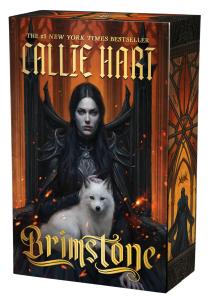
#1 New York Times bestseller • USA Today bestseller • Publishers Weekly bestseller • Amazon Charts bestseller • Indie Booksellers bestseller • Feature film in development with Netflix • Over three million copies sold in the Fae & Alchemy series
The second volume in the phenomenal Fae & Alchemy trilogy from #1 New York Times bestselling author, Callie Hart, features more heart-stopping drama, even higher stakes, and far deadlier consequences.
Now as a new special edition with:
- brand new, character-based cover art
- gorgeous stenciled edges
- full-color gatefold map
- plus, a Carrion point-of-view bonus chapter available in print for the first time!
Duty. Blood. Honor. Power.
Saeris Fane never asked for power, but as the newly crowned ruler of the vampire court, she’s discovering that sometimes even queens don’t get what they want.
Saeris is desperately needed back in Zilvaren, but the recent changes that have strengthened her have also made her weak. With no reprieve from its punishing suns, the realm she once called home will likely kill her if she returns. Saeris must send someone in her stead … but does falling for Fisher mean that she can trust him?
Kingfisher of the Ajun Gate has defeated armies and survived hell, but this might just be the death of him. With a mysterious curse crippling Yvelia, the last thing Fisher wants to do is leave his lands and his people, but he made Saeris a promise—a promise he now intends to keep.
As darkness falls across Yvelia, Saeris and Fisher must pass through fire and brimstone to save both their realms and the people they love.
Trigger warning: Brimstone describes graphic violence and adult situations, and is for readers 17+.
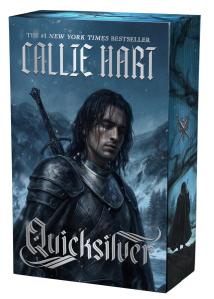
New York Times bestseller • USA Today bestseller • Publishers Weekly bestseller • Amazon Charts bestseller • Indie Booksellers bestseller • Feature film in development with Netflix • Over three million copies sold in the Fae & Alchemy series
Experience the no-holds-barred first novel in the phenomenal Fae & Alchemy trilogy from #1 New York Times bestselling author Callie Hart, featuring razor-sharp banter, heart-stopping action, and blistering hot romance.
Now as a new special edition with:
- brand new, character-based cover art
- gorgeous printed edges
- full-color gatefold map
- plus a Kingfisher point-of-view bonus chapter available in paperback for the first time!
Do not touch the sword. Do not turn the key. Do not open the gate.
Saeris Fane is good at keeping secrets. No one knows about the strange alchemical powers she possesses, or the fact that she has been stealing from the Undying Queen for most of her twenty-four years. But a secret is like a knot. Sooner or later, it’s bound to come undone.
When Saeris is caught stealing something she shouldn’t, she accidentally reopens a dormant gateway between realms and is whisked away to a land of ice and snow. There, she discovers that the Fae—creatures of legend and nightmare—are not only real, but they are caught up in a centuries-long conflict that might just get her killed.
After inadvertently binding herself to a secretive and incredibly powerful Fae warrior named Kingfisher, Saeris quickly learns that he will use her secret magic to protect his people, no matter what it costs him… or her.
Be careful of the deals you make, dear child. The devil is in the details…
Trigger warning: Quicksilver describes graphic violence and adult situations, and is for readers 17+.
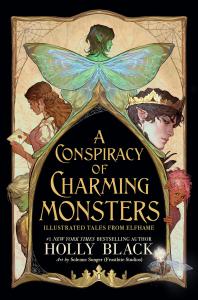
#1 New York Times bestselling author Holly Black returns to the world of Faerie in this gorgeously illustrated collection of short stories, where beauty can be monstrous and love can be capricious …
A reluctant king is thrown into turmoil when the girl he loves to hate is stolen by the Undersea.
An exiled redcap, trapped in the mortal world, must rediscover his inner monster.
A mortal girl sacrifices the other half of herself for an unworthy faerie lover.
A tiny sprite’s determination to prove herself puts the entire High Court in danger.
In this collection, #1 New York Times bestselling author Holly Black combines her signature wit and lush world-building with stunning full-color art by Frostbite Studios in six irresistible tales that return readers to the world of the Modern Faerie Tales and Elfhame, including two never-before-seen stories: one revealing the interior life of Madoc while in exile and the other featuring the moment that High King Cardan realizes what he most desires.
Don’t Miss:
The Cruel Prince
The Wicked King
The Queen of Nothing
How the King of Elfhame Learned to Hate Stories
The Stolen Heir
The Prisoner’s Throne

In this exciting thriller from #1 New York Times bestselling author David Baldacci, the 6:20 Man is leaving U.S soil—this time drawn into a storm of billion-dollar secrets and international power plays that could shatter the world order.
When fearless war correspondent Theresa Lee is shot on a storm-swept Manhattan street and the man she was meeting, Bill Walker, vanishes, the 6:20 Man, aka former Army Ranger turned federal investigator Travis Devine, is called in. Theresa is an investigative journalist, Walker a legendary analyst for the Five Eyes alliance that gathers intelligence that could topple governments around the world. A professional hit team has tried to silence one and snatched the other—and Devine has to find out why.
From New York’s glass-and-steel canyons to the glittering harbors of Australia, Devine is pulled into the orbit of the Woolwine empire—an Australian dynasty whose fortune makes them more powerful than some nations. Partnering with Anais Jones, a driven, Sydney-based homicide detective, he uncovers a lethal convergence of rogue intelligence operations, Russian mobsters, compromised prisons, and a quiet campaign to redraw the global balance of power.
To stop a conspiracy fueled by weaponized data and manufactured truths, Devine will have to untangle a love story that may be a lie, a rescue that may have been conjured, and a billionaire’s ambition with a body count. In a world where enemies wear the faces of allies, the only currency that matters is information—and the 6:20 Man is running out of time to keep it all from crashing down.

The #1 New York Times bestselling author of Lights Out brings a snowy, slow-burn romance, perfect for fans of Abby Jimenez and B.K. Borison—with beautiful designed edges.
Ella Jones knows what to expect from the long, hard winters in the northern reaches of Maine: mostly boredom and monotony, broken up with a bit of skiing or quality time spent with her family. Which leaves her utterly unprepared for the arrival of Benjamin Kakoa, a professional athlete turned advocate in need of a break from fame and notoriety.
With her world—okay, locally—famous wit and special brand of self-deprecation, Ella goes on a full-blown charm offensive to coax Ben out of his shell. But with a rocky past and an uncertain future, Ben’s walls are tougher to tear down than she could have ever anticipated. And once they fall, Ella and Ben will have to come to terms with the potentially tragic reality of their love.

A young woman stands trial for the double murder of her parents in this thriller from the world’s #1 bestselling author, James Patterson.
Eighteen-year-old Janelle Thompson is used to seeing her adoptive parents in the news. Her father is a rising political star. Her mother is the mind behind his first major campaign. Then one Friday night, the whole family makes headlines. Her parents are missing, declared dead—and all the evidence points to Janelle.
A perfect family destroyed by a daughter barely old enough to vote. From her cell at Westfall Justice Center, Janelle swears she’s innocent, that she loved her parents. If only she could convince someone—anyone—that she’s telling the truth.
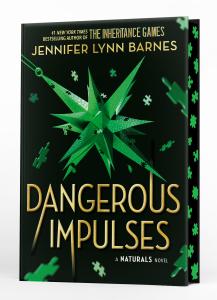
The New York Times and USA Today bestselling series with over 3 million copies sold!
The Naturals are BACK! as #1 New York Times bestselling author Jennifer Lynn Barnes delivers the highly anticipated new installment in her beloved Naturals series.
This gorgeous Deluxe Limited Edition is available while supplies last and features:
- Beautiful designed edges
- Special case
- Special endpapers
- Special effects on jacket
- A ribbon book marker
Cassie Hobbes joined the FBI’s Naturals program at seventeen because she had an incredible ability to read people. Since then, Cassie, fellow profiler Dean, emotion-reader Michael, lie-detector Lia, and statistical genius Sloane have caught serial killers, outsmarted masterminds, and saved countless lives.
Now, eight months after the most twisted, traumatizing case of their lives and still dealing with the psychological fall-out, the Naturals decide to take on a joyful mission for once: playing matchmaker. With Christmas fast approaching, how hard could it be for an emotion-reader, a deception detector, two profilers, and a statistician armed with a wealth of data on romantic relationships to secure a happily ever after for two people who are already very obviously in love?
Turns out … very. Because to bring their FBI mentors back together, the Naturals will first have to solve the mystery of why Special Agent Veronica Sterling can’t let herself have the very thing she wants the most. Profiling a profiler is tricky business, and it soon becomes clear that to solve this mystery, the Naturals need to uncover the past. Add in a puzzling series of interconnected crime scenes, an UNSUB with a fondness for snow, and a cold case on the verge of heating up, and it’s shaping up to be a killer Christmas.
Catch every thrilling twist and turn of The Naturals series in:
·The Naturals
·Killer Instinct
·All In
·Bad Blood
·Dangerous Impulses
·Twelve (enovella)
For more unputdownable series from Jennifer Lynn Barnes, don’t miss the beloved Inheritance Games Saga and The Debutantes duet.
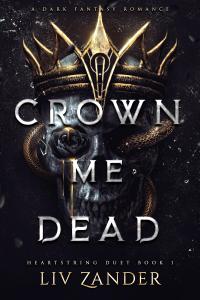
THE #1 BESTSELLING DARK ROMANTASY LEAVING READERS WORLDWIDE IN TEARS
Wed me. Bed me. Slit my throat.
Born in dirt, raised in rot, I dig graves for the dead, while the living decay around me. When my brother coughs blood, he appears. A man too polished for the graveyard, with a bargain too cruel for the light: Seduce the King. Become the Queen. Die. And my brother lives.
Kael is a nightmare of living ruin, the rotting ruler of a festering realm. And Vale is his shadow, the cold architect of my demise. One man needs my heart to beat. The other plans to stop it forever. They think I’m a pawn. But I’m the gravedigger’s daughter. And I know exactly where to bury them.
Welcome to the funeral.
Darkly seductive, beautifully written, and deeply emotional, the Heartstring Duet will sweep you away into a world of forbidden desire, deadly intrigue, shocking twists, and impossible choices.
**Crown Me Dead is book one of two in the completed dark fantasy romance Heartstring Duet. Don’t miss book two, Crown Me Yours. The world contains deception, mystery, violence, dark elements, and mature content. What this book doesn’t contain is a hero (because villains do it better). You can find more detailed information at Liv Zander’s website.**

THE UNFORGETTABLE FINALE TO THE #1 BESTSELLING DUET THAT WILL WRECK YOU, HEAL YOU, AND HAUNT YOU.
Wed him. Bed him. Slit his throat.
I killed the king. Crowned myself in his blood, But the curse still festers.
To break it, I need Death, on his knees, a ring on his finger. My blade at his throat.
The god fights me to the grave, evades my touch, mocks my wanting.
He would rather tear himself apart than let me close enough to end this. But I didn’t come this far to lose. I came to crown him mine.
Welcome to your wedding, my love.
Darkly seductive, exquisitely written, and deeply emotional, the Heartstring Duet is a breathtaking tale of forbidden love, impossible choices, and hard-won hope that will break your heart and put it back together again.
**Crown Me Yours is book two in the dark fantasy romance Heartstring Duet. The world contains deception, mystery, violence, dark elements, and mature content. What this book doesn’t contain is a hero (because villains do it better). You can find more detailed information at Liv Zander’s website.**
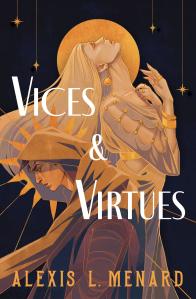
The #BestofBookTok author of House of Bane and Blood is back with an original standalone romantasy where a witch resurrects a centuries-old con man to help defeat an evil god, only to uncover secrets about their own ill-fated past lives and … love.
The Cycle always repeats itself. Why would this one have a different ending?
The Past: Osric Hale lives, steals, and commits all his vices under the ruthless sun of Sol-Trabes. After completing corrupted contracts for good coin, he’s almost saved enough to pay for a new life somewhere else. When his last job goes wrong, he’s tasked with finding a missing Divine with a woman who hates him—or face eternity in a crypt. Everything changes when the job for a lifetime ends in the death of the Sun King. Osric loses his life, the woman he loves, and from his failure, the realm is left stuck in Night.
The Present: Desiree Darrow needs to end the Eternal Night to stop her sister from dying under service to the Night Queen. But to do this, she needs the help of a man who died over a hundred years ago. As a Soul Summoner, she raises Osric Hale from the dead to help her find the Sun King, set his soul free, and restart the Cycle. But old betrayals and secrets are resurrected with him, challenging the path ahead.
As the past and present converge, Des discovers a centuries-old connection between her and Osric, and an ancient evil that has endured just as long. The past repeats itself, but the Cycle must be broken. Desiree and Osric will have to face their greatest sacrifice yet to bring back the Sun.
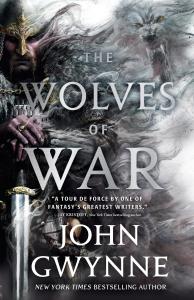
King of heroic fantasy and New York Times bestselling author John Gwynne returns with a blockbuster epic fantasy inspired by Slavic mythology and packed with ancient magic, heroic sacrifice, and thrilling adventure.
“Gwynne is a rare breed of writer whose gift lies not in his panoply of talents, but in his authenticity. The Wolves of War is a beautiful book.”– Pierce Brown, #1 New York Times bestselling author
“A tour de force by one of fantasy’s greatest writers.” – Jay Kristoff, New York Times bestseller author
THE WOLVES OF WAR ARE BARING THEIR FANGS
The Clans once lived freely, honouring their gods and traditions. Then the northern invaders unleashed a tide of blood and fire. Now the Clans are a conquered people.
Ivan cares not for wars or kings. His only concern is the safety of his family, especially his daughter Halia, whom he would protect with his life. Halia has been trapped in her own body since birth, yet at night she has dreams of running with wolves and speaking with fae creatures of the forest. Many believe her cursed, but Halia’s awakening powers may be the only way she and her family can survive the coming storm.
For the wolves of war are stalking the horizon. Two princes have become mortal enemies, and an iron-toothed witch haunts the shadows. As mighty nations clash, Halia must master her strange magic to protect those she loves. To do so, she must accept a terrifying truth.
Sometimes, the only way through the darkness is to embrace it.
“Gwynne artfully weaves myth and history to capture the reader from the very first sentence.” – Victoria Aveyard, #1 New York Times bestselling author
“A masterclass in heroic fantasy.” – Danielle L. Jensen, #1 New York Times bestselling author
“Gwynne is a master storyteller whose heroic characters remind us that even in dark and violent times, there is goodness and light.” —Fonda Lee, author of The Last Contract of Isako and the Green Bone Saga
“Exceeds expectations from the very first sentence.” – Robin Hobb, New York Times bestselling author

From Mo Willems Workshop comes this COOL, SWEET, and LOVELY storybook starring The Pigeon, Duckling, and more pals. Includes bonus character stickers!
Duckling gets a surprise in her mailbox—a valentine! But whoo-whoo is it from? Do YOU know? Find out in this fun-filled mystery with Duckling, The Pigeon, Nana-dactyl, and more friends.
Mo Willems Workshop makes books that you can read AND play! Starring The Pigeon, Elephant & Piggie, and more of your favorite Mo Willems pals, our books feature fun and engaging stories, games, and activities designed to spark creativity … and stop pigeons from driving buses.
This 40-page storybook is perfect for ages 3 to 5. Read it together on Valentine’s Day or any special day of the year!
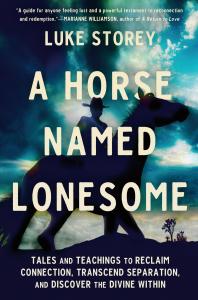
A transformational roadmap for healing existential loneliness that explores how to break the cycle of separation at its source, from creator and host of the top-rated podcast The Life Stylist, ideal for readers of Find Your People and How to Know a Person.
We are living in a loneliness epidemic. People long for connection, yet even with endless resources on belonging, many still feel alone. After nearly three decades devoted to spiritual inquiry, recovery, and lived transformation, Luke Storey discovered that loneliness is not simply a lack of people—it arises from a felt sense of separation within ourselves.
A Horse Named Lonesome traces Luke’s journey through addiction, trauma, recovery, and profound spiritual awakening to reveal how early disconnection imprints the psyche. Through deeply personal storytelling and grounded spiritual insight, he shows how loneliness often disguises itself as anxiety, depression, compulsive striving, relational chaos, or substance abuse. The pain of separation doesn’t always look like solitude—it can look like overachievement, codependence, obsession, or escape.
This book explores:
- How early trauma, shame, and birth-imprinted separation fracture identity and distort intimacy
- The difference between false belonging and authentic connection
- How ego, performance, and persona deepen separation
- How conscious relationship becomes a path of devotion, discernment, and shared evolution
- Why addictions and spiritual seeking often stem from the same longing for unity
Blending memoir with reflective insight and practical inner work, A Horse Named Lonesome offers readers a courageous and deeply human path toward reconciliation, belonging, and authentic connection.

#1 International bestselling author Ian Rankin returns with a razor-sharp, twisty standalone thriller—this one exposing the lives of the 1% in London’s most exclusive high rise.
Facing Hyde Park, The Heights is London’s most coveted luxury high-rise apartment—designed to satisfy every need, with a gym, infinity pool, cinema, and more, where self-made owner-developer Allan Franklyn himself has claimed the penthouse duplex. His neighbors include some of “Money London’s” biggest personalities: a wealthy art dealer, a young heartthrob pop star, a foreign heiress, a gangster’s wife. The residents are used to service, deference, and privacy, all on their terms.
But when nighttime concierge Dwayne Hogarth is found dead in the lobby, none of that is in their control anymore, and everyone’s under the unwelcome scrutiny of Detective Sergeant Gillian Gish. Her questions begin with the party on the 4th floor the night Dwayne died, which ended with a fight; the missing key to one of the apartments; and a mysterious gap in the security camera footage. Before long, Gish uncovers the unsavory truths and dark secrets that lurk beneath the glittering facades of the building and its inhabitants.
Filled with shocking twists and unforgettable characters, The Heights confirms Ian Rankin’s status as one of the most original and compelling crime writers of our time.
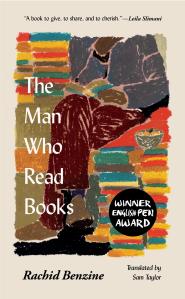
Barnes & Noble Best Fiction of 2026
An elderly bookseller improbably keeps his shop open in Palestine, telling a foreign correspondent the ways in which literature has provided him with refuge and inspiration.
“An essential novel to remind us that those in Gaza continue to read, they continue to exist.” —David Diop, author of Beyond the Door of No Return and At Night All Blood Is Black
A young French photographer travels to Palestine to report on the bombings in the Gaza Strip. One morning, during a ceasefire, he wanders far from his hotel into the narrow alleys of the city. Roaming aimlessly, he stumbles across a bookseller sitting on the doorstop of his shop—an old man, surrounded by stacks of books. As the photographer raises his camera, the bookseller calls out to him and asks him to listen to his story, not simply take his picture.
The story that unfolds is one that encompasses exile and imprisonment, activism and political disillusionment, the joys of love and art and watching your children grow up and thrive, and the tragedies that tear your loved ones from you. Each event is tied to the book that helped him understand and, in some cases, survive it, from Milan Kundera to Frantz Fanon to Umberto Eco to Ernest Hemingway, among many others.
There’s a saying that when an old man dies a library burns, and it’s this very library that the bookseller opens and describes. Rachid Benzine gives us a magnificent modern tale that explores the power of words against barbarism, of books as the last bastions of resistance against the loss of empathy, of literature as a means of sustenance during our darkest hours.

In this steamy romance from the New York Times bestselling author of the Artefacts of Ouranos series, the arctic heats up when a photographer who rarely holds anything back is forced to share a private wing with a grumpy lodge owner who holds everything in.
Photographer Aadya Williams has trekked all the way to northern Canada to nab a career-making shot of a polar bear … and to put 1,500 miles between her and a messy breakup. Despite expecting freezing temperatures, nothing’s colder than the welcome she gets from Reid Doerksen, the gruff owner of the Northern Wilderness Polar Bear Lodge. Even worse, the lodge is overbooked, so now she has to share the private family wing with him for the next two weeks.
At least Aadya has plenty to keep her occupied when she’s not out searching for the perfect photo op. But when a storm strands Aadya and Reid together at the lodge, it’s impossible to avoid the heat simmering between them. As the snow comes down, so do Reid’s walls, and Aadya begins to realize the most important shot of her life may not be one she takes with her camera.

A fearsome criminal known only as “Loman” comes to town for the holidays, unleashing credible threats by the hour. The Women’s Murder Club can’t solve crimes by the Advent calendar, but no one steals Christmas from San Francisco on their watch.
“One clue leads to another … the best entry in the series thus far.” –BookReporter
“For fans of mysteries … there’s nothing that you crave more.” –Associated Press

For Tracey Rooks, life with her grandparents on a Wyoming farm has always been simple. But after her grandmother’s death, Tracey is all her grandfather has. So when Eagle Elite University announces its annual scholarship lottery, Tracey jumps at the opportunity to secure their future and enters. She isn’t expecting much—but then she wins. And life as she knows it will never be same . . .
The students at Eagle Elite are unlike any she’s ever met . . . and they refuse to make things easy for her. There’s Nixon, gorgeous, irresistible, and leader of a group that everyone fears: The Elect. Their rules are simple. 1. Do not touch The Elect. 2. Do not look at The Elect. 3. Do not speak to The Elect. No matter how hard she tries to stay away, The Elect are always around her and it isn’t long until she finds out the reason why they keep their friends close and their enemies even closer. She just didn’t realize she was the enemy—until it was too late.
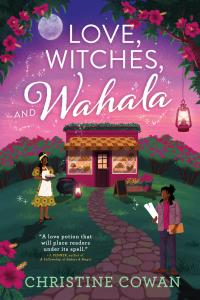
In this romantic, cozy fantasy debut a Nigerian witch must grapple with an ancient curse that will erase her family’s magic and doom her beloved bakery forever unless she finds her soulmate. Perfect for readers of The Very Secret Society of Irregular Witches.
“Absolutely delightful and positively spellbinding.” – Elizabeth Stephens
“The perfect brew of magic, community, and enrapturing romance.” –Julian Winters
“A flirty and spirited romance that makes your soul hum with joyful magic.” –Celestine Martin
In Kamalu Lane, Nneka is a witch grappling with an ancient family curse: find her soulmate or risk all the witches of Kamalu Lane losing their powers forever.
In a desperate attempt to force fate’s hand, Nneka brews a love potion, but chaos erupts when the potion is accidentally added to Nneka’s famous puff puffs, causing every man who eats them to fall in love with her, except Dakoru, the handsome architect determined to reshape Kamalu Lane.
Though Nneka feels an undeniable connection with Dakoru, she knows falling for a human could doom them both. But Dakoru is no ordinary man and it’s clear he is connected to magic in some way.
As their connection grows, Nneka needs to figure out if Dakoru is the key to breaking her curse and restoring balance to Kamalu Lane before its future is lost forever.
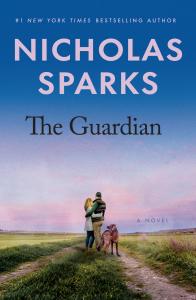
Julie Barenson’s young husband left her two unexpected gifts before he died—a Great Dane puppy named Singer and the promise that he would always be watching over her. Now four years have passed. Still living in the small town of Swansboro, North Carolina, twenty-nine-year-old Julie is emotionally ready to make a commitment to someone again. But who?
Should it be Richard Franklin, the handsome, sophisticated engineer who treats her like a queen? Or Mike Harris, the down-to-earth nice guy who was her husband’s best friend? Choosing one of them should bring her more happiness than she’s had in years. Instead, Julie is soon fighting for her life in a nightmare spawned by a chilling deception and jealousy so poisonous that it has become a murderous desire …
“An involving love story … an edge-of-your-seat, unpredictable thriller.” ―Booklist
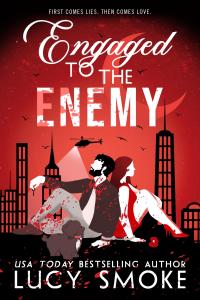
In this dark, steamy rom-com perfect for fans of Brynne Weaver, a woman finds herself working alongside her best friend’s new brother-in-law—one of the most notorious mafia bosses in New York and her worst nightmare.
Michelle Hanson is swearing off men forever. After her last truly disastrous date, she’s ready for a fresh start in her new job. Unfortunately, the freaking universe has other plans, because on her first day she accidently flashes her new boss… who just so happens to be one of New York’s most dangerously handsome mafia kingpins.
The last time Dante Luciani saw her, Michelle was dragging a dead body into an alley. Cute, right? So when he asks her to pose as his fake fiancée for the next few months, Michelle can’t exactly say no, thanks. After all, they both know she can keep a secret. She’ll just have to get through this strictly business engagement without falling for Dante’s charms.
But when your fake fiancé is a notorious mobster, “just friends” is never really an option.